










We all know that global trade is becoming increasingly important. Economies are navigating challenges on multiple fronts, businesses are under pressure to remain competitive, and every opportunity to grow, invest and create new markets must be seized to lead to success.
But what if some of those opportunities are already within reach, and we simply aren’t making the most of them?
For Africa, one such opportunity is the African Growth and Opportunity Act.
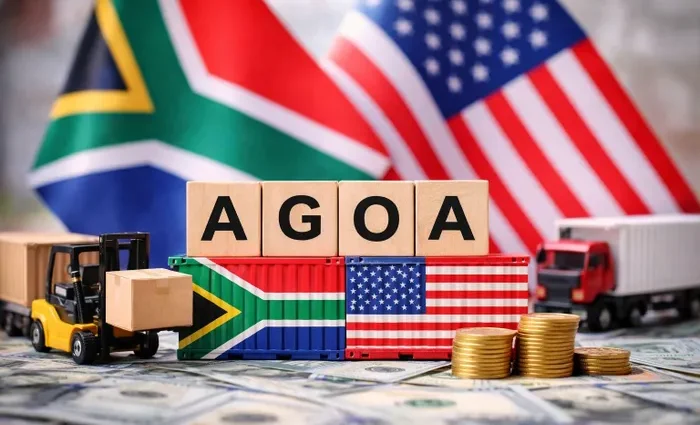
AGOA is a U.S. trade programme established in 2000 to strengthen economic and trade relationships with eligible countries in Sub-Saharan Africa. It provides duty-free access to the U.S. market for more than 1,800 qualifying products, spanning a wide range of manufactured and value-added goods, including automotive components, textiles and apparel, agricultural and processed food products, chemicals, plastics, metals and other industrial products.
Following President Donald Trump’s announcement and the subsequent extension of AGOA through 31 December 2028, South African manufacturers have been given additional time and certainty to pursue opportunities in one of the world’s largest markets.
But access to a market is only part of the equation.
The real question is: are we equipped to take advantage of it?
Because securing an opportunity to supply an international customer is one thing. Having the machinery, skills, capacity and processes to fulfil that opportunity – consistently, competitively and at the required standard – is another.
For KNUTH Machine Tools, however, the significance of AGOA extends far beyond the trade agreement itself.
Does the African industry have the production capacity, technology and skills required to turn market access into manufactured exports?
“We often talk about market access as though it is the finish line. It isn’t. It is the starting point. If African manufacturers are going to compete for more international business, we need to build the production capacity and capabilities that allow us to compete -and deliver – at an international level,” says James Fourie, Technical Sales Team Lead, KNUTH SA.
For manufacturers across sectors such as automotive, mining, engineering and energy, increased export opportunities could mean greater demand, making it essential to optimise operations, improve productivity and strengthen production capacity.
FROM MARKET ACCESS TO MANUFACTURING CAPACITY
The renewed focus on AGOA comes at a time when manufacturers globally are under pressure to produce more efficiently while controlling costs and maintaining consistent quality.
For African manufacturers, the opportunity is therefore not simply about exporting more. It is about being equipped to manufacture more competitively.
There are plenty of ways manufacturers can improve how competitively they operate. It can start with something as simple as identifying production bottlenecks, reducing downtime or getting more out of existing equipment. For others, it may mean improving production planning, reviewing tooling and processes, upgrading ageing machinery, introducing CNC technology or investing in automation.
Just as importantly, manufacturers need the right skills to make the most of these improvements and ensure that technology translates into real gains on the shop floor.
“Manufacturing competitiveness starts long before a product reaches the shipping container,” says Ruan Cowley, Managing Director of KNUTH SA. “It starts with the equipment, the people operating it and the processes behind it. If AGOA creates additional demand, manufacturers need to be ready to respond to that demand, and that requires investment in production capability.”
This is particularly relevant for businesses that may currently be operating with limited capacity or processes that are already under pressure.
A manufacturer receiving an opportunity to supply a larger international customer cannot necessarily scale simply by adding another order to the production schedule. Increased volumes can expose operational inefficiencies.
The result is that market access can quickly become a manufacturing-capacity challenge.
THE MACHINERY QUESTION
For more than 100 years, KNUTH Machine Tools has been part of the global manufacturing industry, working alongside manufacturers as production methods, technologies and market demands have evolved.
That experience has shown that improving manufacturing competitiveness is rarely about one machine or one investment. It is about understanding the operation as a whole.
For machine shops and component manufacturers, technology can play an important role in that process. Modern CNC machinery, for example, can improve consistency, reduce manual intervention and support the production of more complex components. But the right technology depends on the needs of the individual operation.
“Buying a machine is not the same as improving a manufacturing operation,” says Fourie. “You first need to understand where the constraints are. It could be capacity, workflow, skills, tooling, programming or simply the way a process is being managed. Once you understand that, you can make more informed decisions about where technology can add real value.”
That broader approach becomes increasingly important as manufacturers look to compete for international business.
Ultimately, the goal is not simply to have more technology on the factory floor. It is to build more capable, efficient and competitive manufacturing operations.
“International competitiveness isn’t built overnight,” says Cowley. “It requires manufacturers to make decisions today that improve their ability to compete tomorrow. That includes machinery, skills, service, maintenance and the ability to keep production running.”
A WINDOW – NOT A GUARANTEE
AGOA’s current authorisation runs through the end of 2028, while the United States has also begun a process to consider how the programme could be modernised.
That means manufacturers should view the current environment as an opportunity to assess their readiness rather than simply waiting for export demand to appear.
AGOA is also not the only preferential trade opportunity available. Through agreements and arrangements such as SACU, SADC, the African Continental Free Trade Area (AfCFTA), the SADC–EU Economic Partnership Agreement, the SACUM–UK Economic Partnership Agreement, SACU–EFTA and SACU–MERCOSUR, South African businesses have access to a range of regional and international markets under preferential trading conditions.
The markets are there. The opportunity is there. The question is whether African manufacturing is ready to make the most of it.
For KNUTH, that means encouraging manufacturers to consider a more fundamental question: If a new international opportunity came across the desk tomorrow, would the factory be ready to produce it?
The market may open the door. Manufacturing capability determines whether you can walk through it.
