








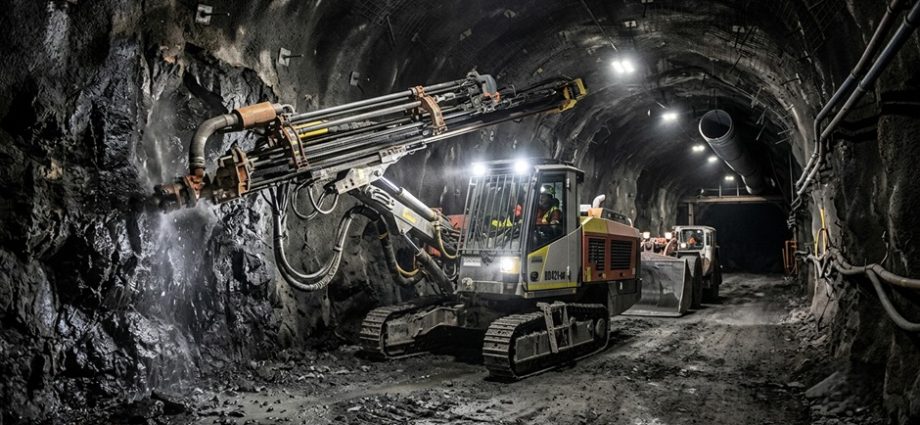
However, as surface deposits become less and less, and need for metals and minerals continues to accelerate, the mining industry is migrating underground – and the equipment used beneath the surface is rapidly evolving. The global underground mining equipment market size was valued at USD 17.9 billion in 2024, and it is expected to expand at a CAGR of 5.7% during the forecast period 2025-2033 to reach around USD 29.7 billion, according to Research Intelo.
What is driving growth?
Demand for minerals and metals increases. Growing urbanization and industrialisation in developing economies including China, India and Brazil is increasing demand for energy coal, copper, gold and iron ore. Meanwhile, high grade near-surface resources are being exhausted which forces operators to go underground and find more challenging deposits requiring larger, more advanced equipment. Governments in Asia Pacific and Latin America are also increasing investment in this infrastructure.
Technology. Automation, remotely controlled operations and electrification are transforming underground mining. Automated drilling, loading and hauling stations can eliminate human presence from risky zones, while with data analytics and predictive maintenance, operators can minimize downtime and maximize the lifespan of equipment.
Safety and regulation. Tighter safety and environmental regulations, particularly in North America and Europe, are prompting mining firms to purchase equipment with proximity detection, collision avoidance and ventilation monitoring. Increasing concern about occupational health hazards is also leading to fleet upgrades throughout the industry.
Segment highlights
Equipment type
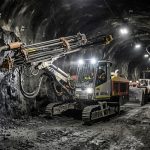
The range of products includes longwall systems, room and pillar equipment, drills, loaders, trucks and other auxiliary equipment. Longwall systems, such as the interfaces between coal wall blocks, are largely used in coal mining, as they help extract large area of the coal production seamlessly, while automated longwall equipment is booming in China and the United States. Room and pillar method is still the primary means to develop complex geology and irregular ore deposits. Drilling rigs are becoming more and more automated as they keep pace with telemetry and analytics, enabling to reach deeper ore deposits and recovery ratios. Meanwhile loaders and trucks are adopting electric and battery power solutions, while other auxiliary equipment like ventilation systems, roof bolters and conveyors are introducing remote controls and smart sensors.
Application
Coal mining is still the largest market application, concentrated primarily in the Asia Pacific, but is vulnerable to environmental controls and competition from renewables. Metal mining is driven by demand for copper, gold, nickel, and zinc, along with one of the new, fast-growing applications for metals: electrified transportation, renewable energy equipment, and electronics. Mineral mining, which includes potash, salt, and gypsum, is used in agriculture, construction, and manufacturing; rare earth and specialty minerals makes up a small but strategically critical part of the market.
Power source
Diesel equipment has long been the preferred option for its rugged reliability and power – and fossil fuel costs, vent requirements and other operating costs are taking a toll. Battery-electric vehicles, hybrid configurations and trolley support trucks provide lower emissions, lower costs and a safer environment for personnel, and they particularly appeal in deep, isolated operations where venting costs are high. Hydrogen fuel cells and CNG are still emerging technologies, backed up only by a handful of pilot projects, while solar and wind is starting to show up in more remote, off-grid operations.
Mining method and end user
Soft rock mining (coal, potash, salt) can have productivity gains from highly mobile continuous miners and longwall operations with shuttle cars. Hard rock (metals and abrasive ore bodies) can achieve productivity from rugged jumbo drills and rock bolters with demands for precision and automation. Equipment buyers Mining operators are the biggest customer segment, followed by large and small contractors, who are expanding their ownership through rental and leasing strategies to gain access to technology. Overseeing them are government agencies, research organizations and small-scale miners.
Regional Outlook
Region 2024 market size
Asia Pacific USD 7.2 billion
North America USD 4.8 billion
Europe USD 3.2 billion
Latin America USD 1.8 billion
Middle East & Africa USD 0.9 billion
Asia Pacific is the leader (supported by China, India and Australia’s large-scale mining sector) and to continue at a 6.1% CAGR. North America is a mature, tech-savvy market with interest in autonomous vehicles, electric equipment and digital mine management. Europe is set apart by stringent environmental regulations and early adoption of electric equipment and renewable energy. Latin America (Chile, Peru, Brazil) and Middle East & Africa (South Africa, Ghana) are set to be growth markets through discoveries of new minerals and new investment by foreign investors.
Competitive landscape
The market is supported by a long list of global players: Caterpillar, Komatsu, Sandvik, Epiroc and Hitachi Construction Machinery, as well as others including Atlas Copco, Boart Longyear, Liebherr, Sany, Volvo Construction Equipment, Normet, Furukawa, XCMG, Metso Outotec, JCB, Doosan, Astec and CCTEG. Automation, electrification and digital transformation are all giving rise to a flurry of mergers, joint ventures and strategic collaborations. Competition is likely to ratchet up further with new entrants from emerging markets putting strain on pricing, while established companies continue to benefit from aftermarket assistance, flexible financing and a mix of service offerings. Sustainability means less emissions, energy consumption and the improved safety at time of contract awards.
Opportunities and Challenges
The greatest potential is in autonomous and remotely operated machines, AI-enabled predictive maintenance and environmentally friendly electric and hybrid powertrains. Growth is also still possible in emerging markets in Asia Pacific, Latin America and Africa – especially by local manufacturing and other alliances.
Major headwinds Capital costs, commodity price fluctuations and economic uncertainties can all constrain investment in this sector, particularly in developing markets. The impact of regulatory compliance is increasing. And the trend toward phasing out fossil fuels could reduce demand for coal equipment.
Conclusion
Underground mining equipment market to grow from USD 17.9 billion in 2024 to USD 29.7 billion in 2033 Underground mining equipment market to grow from USD 17.9 billion in 2024 to USD 29.7 billion in 2033 As underground mining operations extend and get cleaner, vendors that provide safe, automated, low-emission equipment, supported by effective service and flexible financing will profit the most.
