









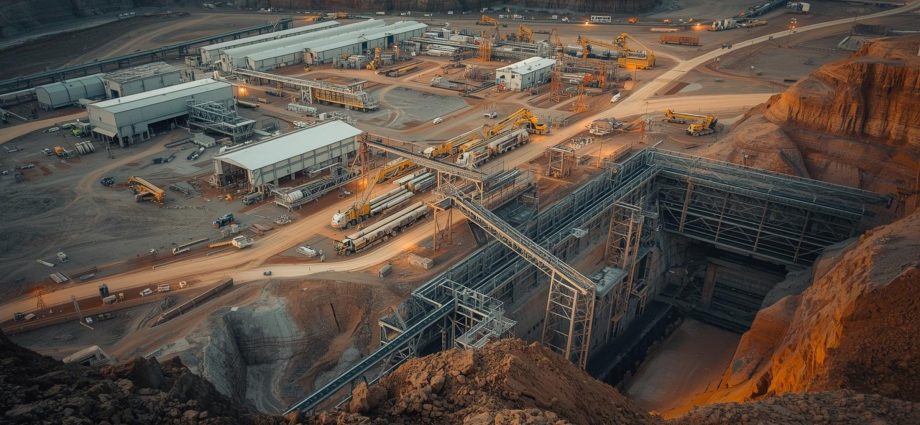
The Karowe diamond mine in Botswana exemplifies the strategic evolution of modern diamond mining as operators shift from surface to underground extraction. This transition reflects more than technical adaptation; it represents a long-term strategy for resource optimisation, operational sustainability, and value creation across decades-long asset lifecycles. As surface resources near depletion, Karowe’s move underground requires sophisticated project management, integrated planning, and specialised contractor expertise to ensure continuity while expanding production capacity. Mining permitting and regulatory compliance further influence the operational sequencing, reinforcing the strategic nature of this transition.
The complexity of underground mining at Karowe is reflected in its contract architecture, which encompasses lateral development from production and ventilation shafts to orebody locations, construction of extraction levels, underground crushing chambers, ore storage bins, pump stations, drilling horizons, and workshop facilities. Coordinating these infrastructure components requires seamless integration between surface operations and subsurface networks. Production and ventilation shafts serve as critical arteries, demanding precise engineering to maintain operational continuity during simultaneous construction and extraction activities. Horizontal tunnels connecting shafts to kimberlite deposits involve specialised excavation techniques adapted to the geological characteristics of diamond-bearing formations. Underground processing facilities, including crushers and storage systems, must operate efficiently within confined spaces while maintaining material flow optimisation. Water management is equally crucial, with pumping and circulation systems addressing dewatering, dust suppression, and environmental protection requirements.
Financially, the Karowe underground transition represents a substantial capital commitment with long-term implications. Investment in lateral development, shaft infrastructure, underground processing, and support facilities ranges from tens to hundreds of millions of dollars, reflecting the intensity of resources required for successful underground operations. Carefully planned project timelines, such as mobilisation in the second quarter of 2026 and lateral development commencing in July 2026, demonstrate the mine’s strategic approach to cash flow management and phased investment. Contract structures integrate risk mitigation strategies to address geological uncertainties, construction dependencies, and contractor performance. Provisions allow scope adjustments in response to actual subsurface conditions, while sequential implementation of project phases validates technical assumptions, optimises cash flow, and enables contractor performance evaluation.
The phased development strategy at Karowe also prioritises workforce development and local employment. Early recruitment, training programmes, and skills transfer initiatives ensure that local workers acquire the technical capabilities necessary for safe and efficient underground operations. Structured implementation timelines allow the mine to progressively establish regional supply chains, refine quality control procedures, and embed regulatory compliance measures. Local employment initiatives provide strategic advantages, including regulatory adherence, community support, operational stability, and regional capacity building.
Environmental sustainability is integral to Karowe’s underground transition. Comprehensive groundwater management prevents aquifer contamination, while surface monitoring mitigates subsidence risks. Waste rock handling systems and closed-loop water recycling minimise environmental impact, and ventilation and emission control technologies ensure safe working conditions and reduced carbon footprints. Advanced environmental technology integration, including energy efficiency optimisation and predictive monitoring systems, enhances operational performance while aligning with global best practice standards.
Karowe’s adoption of automation and digitalisation strengthens operational efficiency and safety. Real-time monitoring networks, automated material handling, predictive maintenance systems, and AI-driven analytics optimise extraction, equipment utilisation, and overall performance. Safety enhancements include automated ventilation control, integrated emergency response systems, and continuous structural monitoring to protect workers and infrastructure.
Market considerations inform the timing and structure of underground development at Karowe. Production schedules align with diamond price cycles to maximise revenue potential, while stable underground operations ensure supply security and support premium product positioning. Access to high-grade ore zones underground provides a competitive advantage in product quality, operational flexibility, and sustainability positioning, contributing to long-term strategic value.
Lessons from Karowe highlight the importance of early contractor engagement, integrated project planning, risk allocation optimisation, and performance-based incentives in achieving operational excellence. Strategic planning, comprehensive feasibility investment, stakeholder engagement, financial flexibility, and technology integration are key factors underpinning the mine’s successful underground transition. The Karowe underground project demonstrates how carefully coordinated infrastructure development, workforce preparation, environmental stewardship, and technological innovation can create sustainable competitive advantages in diamond mining.
By focusing on Karowe’s phased underground transition, mining companies gain insights into effective management of complex projects, strategic investment allocation, and long-term operational resilience. The mine’s approach offers a blueprint for the global diamond sector as surface reserves decline and underground operations become increasingly central to production strategies.
