











South Africa remains an important player in the global vanadium market, ranking fourth among the world’s top five producers and one of the few primary vanadium producers (alongside Brazil and China). In other words, vanadium in South Africa is extracted from ore rather than recovering it from metallurgical slag or recycled from spent catalysts. This enables South Africa to supply high-purity vanadium pentoxide, which is used in the aerospace and defence industries.
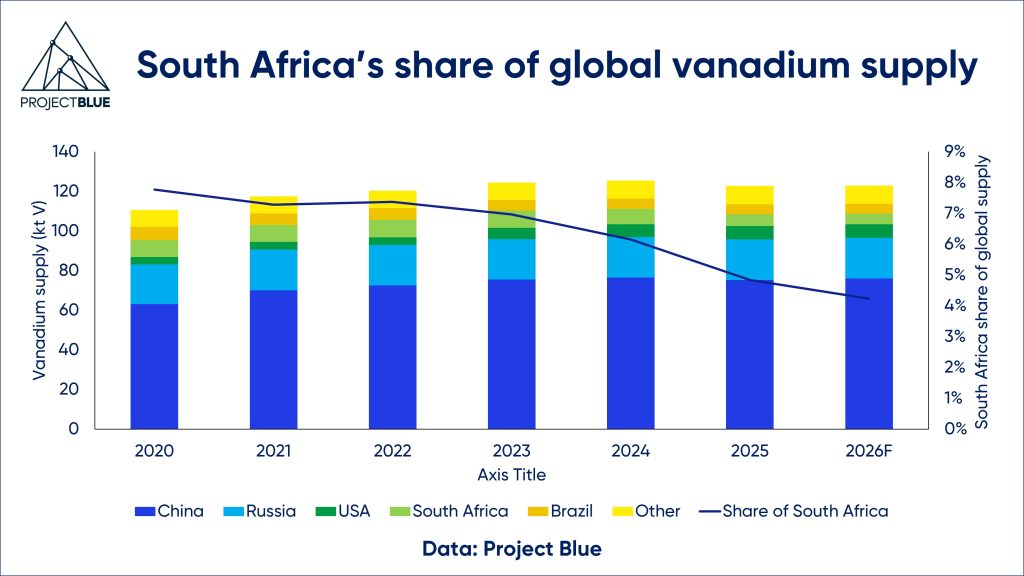
Nevertheless, South Africa’s share of global vanadium production fell from 7% in 2023 to 5% in 2025 (in global production terms excluding China, from 18% to 13%), whilst domestic production in 2024–2025 fell by an average of 17%py. According to Project Blue, the prospects of a return to previous production levels, at least in the near term, look bleak.
The end of 2024 marked a turning point for South Africa’s vanadium industry. After several years of attempts to rescue and restructure the business, Bushveld Minerals, South Africa’s second-largest vanadium producer after Glencore’s Rhovan, was forced to shut down its Vametco mine, whilst the Vanchem plant was sold to new owners and also close. As of June 2026, both facilities remain non-operational, shipping products only from stock. Rhovan, meanwhile, although still operating, is gradually reducing production: from 2022 to 2025, by an average of 2.9%py.
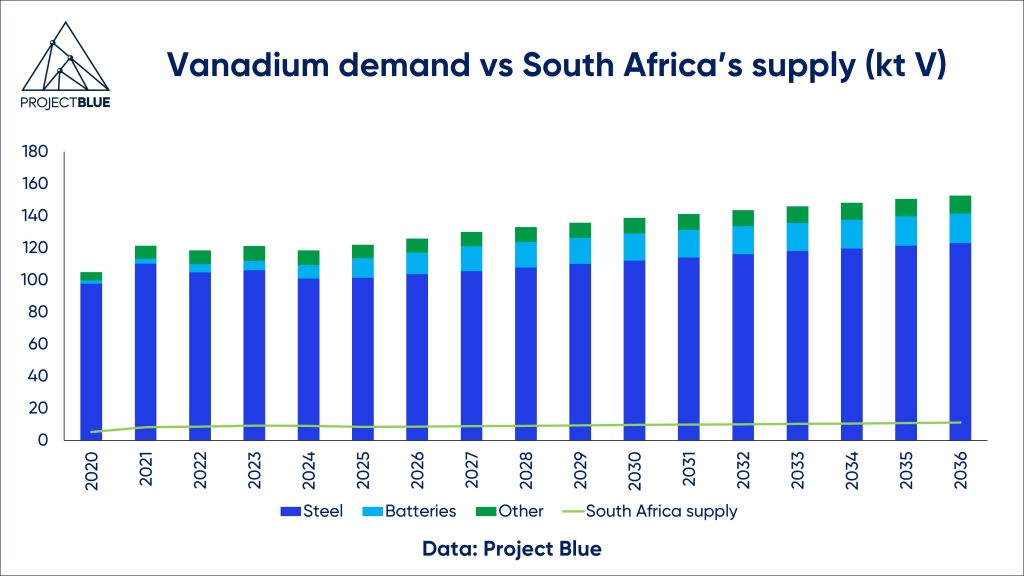
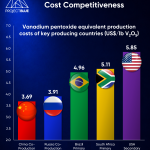
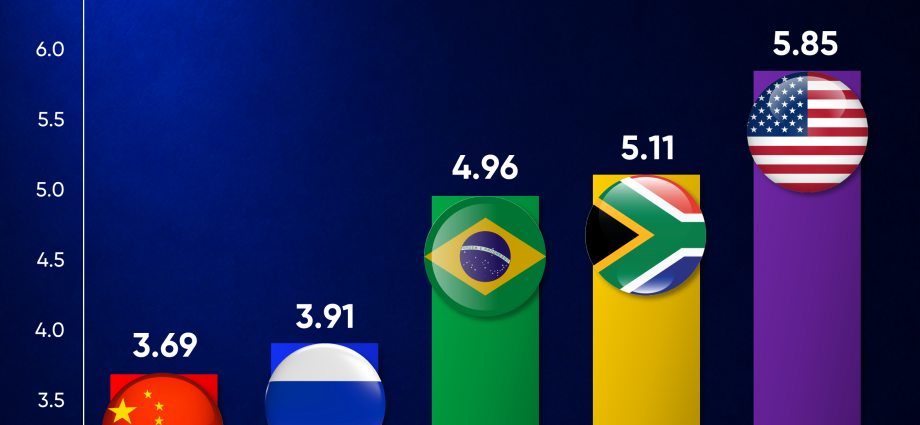
What, then, is the reason for such dramatic changes? First and foremost, South African companies (primarily Vametco and Vanchem) are significantly outperformed by their Chinese competitors on production costs. Co-producers in China (i.e. plants producing vanadium products from steel-bearing slags) are predominantly in the first and second quartiles of Project Blue’s vanadium cost curves, comfortably ahead of the rest of the world (ROW). This is the result of these assets’ low direct cash costs, chiefly due to low or no feedstock costs and the depreciation of the RMB against the US dollar, despite inflation. In turn, the persisting liquidity and working capital constraints at Bushveld Minerals’ Vametco mine and Vanchem plant have elevated unit costs and limited output. Production costs at these operations are estimated to be almost twice those in China.
The second reason for the decline in vanadium production in South Africa is the slowdown in demand growth. In 2025, the steel industry (particularly rebar) remained the world’s largest consumer of vanadium, accounting for around 83% of demand. In addition, around 10% of demand comes from the vanadium redox flow batteries (VFBs) segment, whilst applications in chemicals and alloys remain niche.
According to Project Blue, steel will remain the dominant sector for vanadium consumption in the coming years. We expect global steel production to reach 1,867Mt in 2026, based on flat production in China, marginal growth in developed economies, and continued strong momentum in India. However, we acknowledge downside risks to China’s production, depending on export levels. The increase in vanadium consumption in steel will be driven solely by a gradual rise in its usage intensity as rebar standards become stricter.
Meanwhile, most of the additional vanadium demand (around 3.9% CAGR between 2025 and 2036) is expected to come from the VFBs segment, with China continuing to dominate this market. It is reasonable to expect that the trend towards installing VFBs with longer storage durations will continue, since, from a cost perspective, the advantages of VFB systems become apparent, particularly with increasing energy storage durations and the high degree of electrolyte recyclability. Historically, LFP batteries have been the most cost-competitive technology and the primary alternative to VFBs. However, since 2026, sodium-ion batteries have begun to close the gap.
