
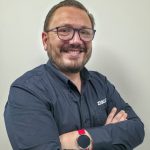








The Wits Mining Institute (WMI) – a multidisciplinary research and training hub at the University of the Witwatersrand (Wits) – has appointed Dr Pontsho Twala as its new director.
Dr Twala brings over a decade of experience in mining research, education and stakeholder engagement, underpinned by a doctorate from the School of Mining Engineering at Wits. She is the second Black South African female to obtain her PhD in Mining Engineering, having earned her BSc (Honours) and Masters degrees from Wits before beginning her career at Mintek, South Africa’s national mineral research and development organisation.
She returned to Wits in 2016 as a lecturer and programme manager for the Centre for Sustainability in Mining and Industry (CSMI) – focusing on artisanal and small-scale mining (ASM). After two years, she moved to a lecturing post in the School of Mining Engineering and was promoted to senior lecturer in 2024.
Evolving demands
Her research portfolio includes projects on ASM, beneficiation, skills development, community development, and environmental sustainability – areas that critical in supporting the transformative role of the mining sector in society. She is passionate about empowering mining communities to actively participate in the industry, fostering inclusive growth and shared value. Her work involves collaboration with multiple stakeholders, including mining companies, government departments, civil society organisations, and local communities.
Dr Twala has led and contributed to high-impact projects for organisations such as the Mining Qualifications Authority (MQA), the United Nations Educational, Scientific and Cultural Organization (UNESCO) and the Natural Resources Defense Council (NRDC). Among her recent research engagements have been projects focused on beneficiation skills, artisan development, critical minerals value chains, and provincial skills reviews aimed at identifying community skills development needs related to participation in mining and other key economic sectors. Many of these studies have been conducted in partnership with the MQA.
This involvement has aligned her experience well with the WMI’s mandate as a hub for innovation, skills development and collaboration. Established to address complex mining challenges, the WMI brings together multidisciplinary expertise to develop integrated solutions for the sector.
Innovation with sustainability
“This approach is more critical than ever, as the challenges facing mining are not only about technical solutions anymore,” she explained. “We need to consider environmental impacts, communities and the broader socio-economic context.”
She highlighted that, under her leadership, WMI will continue to focus on three core areas. Firstly, it promotes innovation and technology, including research into automation, AI and data-driven mining systems. Secondly, it will continue to advance responsible mining, which mining that is safe, socially accepted, and environmentally responsible. The third focus is on skills and capacity building, to support the changing requirements of industry, government and civil society stakeholders.
“One of our flagship projects is the cutting-edge Sibanye-Stillwater Digital Mining Laboratory, where our research into digital technologies is helping define the mine of the future,” she said. This work is complemented by research supported through two SAMERDI centres: SATCAP (Successful Application of Technologies Centred Around People) and RTIMS (Real‑Time Information Management Systems). All three bring together digital innovation, real‑time systems, and people‑centred solutions to advance mining. Another cornerstone of WMI’s work is its focus on skills development, including specialised training such as its Occupational Health and Safety (OHS) programme.
Training offerings
The WMI’s training offerings are informed by sector needs and designed to address identified skills gaps across key stakeholders. These programmes, Dr Twala noted, go beyond traditional training by incorporating critical thinking and systems-based approaches.
“For example, in our OHS programme, we teach participants to look at OHS as a system,” she explained, “This means encouraging them to ask questions, investigate issues and use evidence to inform improvements.”
WMI courses combine academic insights with practical industry inputs, she emphasised, featuring contributions from experienced practitioners and encouraging peer-to-peer learning among participants. This reflects WMI’s broader model of translating research into practical, industry-relevant training.
Africa’s potential
Looking ahead, Dr Twala sees a significant opportunity for WMI to extend its impact beyond the borders of South Africa.
“There is an opportunity for the WMI to be a central hub for knowledge creation and coordination to support Africa’s mining agenda – as outlined in the Africa Mining Vision and Africa’s Green Minerals Strategy,” she said, noting that global demand for critical minerals positions Africa as a key player in the energy transition.
“The discussion is now about how African countries can turn over a new leaf, create their own solutions, lead their own mineral development agendas, and maximise the benefits of mining for their communities,” she said. “In that context, I hope to strengthen WMI’s role as a trusted partner to the mining sector. We have much to offer, with our evidence-based research to help foster innovation and build the skills needed for a more sustainable industry.”
