










Blasting, explosives, and metallurgical solutions provider BME is supporting mines as they navigate rising operational complexity, including deeper orebodies, declining grades, geological variability, higher stripping ratios, increased geotechnical risk, and growing Environmental, Social and Governance (ESG) scrutiny.
During an in-house webinar on improving blast outcomes in challenging geological conditions last month, Nishen Hariparsad, General Manager for Technology and Marketing at BME, said blast outcomes depend on how well geology is understood, measured and managed – not only at design stage, but throughout the blast lifecycle.
“Too often, blast designs are expected to perform as though the ground were consistent,” he said. “At the same time, many operations still respond to poor performance reactively – increasing powder factor, adjusting burden and spacing, and trying to correct outcomes after the fact.”
In today’s environment, this approach is no longer viable. “Mines face heightened safety expectations, greater scrutiny of inefficiencies, intensifying ESG requirements and tightening margins,” he said. “A reactive approach is costly and unsustainable.”
Consistent fragmentation, improved grades and controlled risk
Hariparsad emphasised that predictable blasting is not about eliminating geological complexity, but engineering around it.
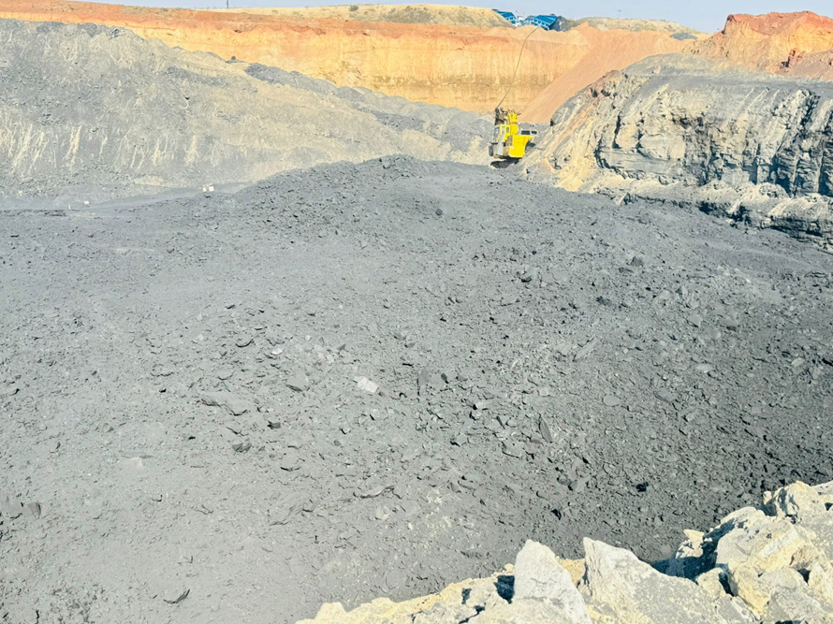
“When blast performance becomes predictable, fragmentation is more consistent, grades improve, and risks such as flyrock, vibration and backbreak are better controlled,” he said. This reduces dilution and secondary blasting, stabilising costs and improving value chain performance.
He also highlighted the link between predictability and safety. “Geological variability remains a leading contributor to blast-related incidents, including misfires, flyrock and instability. Improving predictability reduces risk to people, equipment and the environment.”
He stressed that no single product could solve complex geology. “Improved blasting requires an integrated approach,” he said. “It involves understanding ground conditions, aligning explosive energy with geology, and applying precise initiation to influence burden response and fragmentation.”
Dynamic blasting plans
Hariparsad stressed that blast designs must remain dynamic. “When the ground changes, the plan must change. The ability to do this effectively is a competitive advantage.”
Phetla Sefara, Senior Blasting Engineer at BME, outlined key geological challenges affecting outcomes.
“Variations in rock formation, particularly different geological layers, often lead to inconsistent performance,” he said. Weak contacts between layers can cause uneven energy distribution, while softer material between harder strata absorbs energy, resulting in poor fragmentation, reduced loading efficiency and higher costs.
A hard cap rock layer can further complicate blasting by making initiation and breakage more difficult.
Geological structures also play a significant role. “Irregular faulting and weak contacts disrupt energy propagation, leading to losses and effects such as excessive vibration and air blast,” he said.
Water in blastholes adds further complexity. “Saturated conditions or inflows can negatively affect explosive performance,” he said, noting that interactions between water, geology and poor performance can generate hazardous gases such as NOx.
Where energy, geology and precision intersect
Tom Dermody, International Technology and Field Services Manager at BME, said blasting outcomes are shaped by multiple interconnected factors.
“The selected blasting methodology plays a central role,” he said, noting that cast, buffer, trim blasting and presplitting all require a precise understanding of how energy interacts with the rock mass. Achieving the correct decoupling ratio in presplitting is critical to forming a clean fracture plane.
Rock response is equally important. “Understanding burden behaviour and face profiling helps control backbreak and ensure wall stability,” he said.
Effective energy use is another key factor. “Explosive type and quantity must match the geological profile,” he said. Hard zones such as cap rock require careful energy distribution, while softer zones may need reduced energy or additional stemming to prevent overbreak.
“Blast movement must also be controlled,” he stressed. “Through initiation design, powder factor and burden management, rock movement can be optimised.”
Vibration and air blast management are critical, with wave propagation controlled through charge weights and timing.
He emphasised that fragmentation remains the defining measure of success. “Rock size distribution must be predicted during design and measured after the blast to meet processing requirements,” he said.
Integrating data, detonation and design
Dermody said Blast Alliance™ – an ecosystem of digital blasting solutions – provides real-time insights, predictive simulations and data-driven decision-making. “Tools such as XPLOSMART™, WALLPRO™ and BLASTMAP™ allow engineers to adjust designs and improve control,” he said.
Precision initiation is delivered through the AXXIS™ electronic detonation system. “They offer sub-millisecond timing accuracy, enabling controlled initiation sequences that influence burden response and blast movement,” he said.
BME’s Innovex™ explosives range complements this by offering flexible energy output tailored to geological conditions, ensuring more consistent fragmentation across varying rock types.
These are supported by BME’s Global Blasting Technical Services (GBTS) team. “GBTS works closely with operations to refine designs, address site-specific challenges and improve safety, efficiency and cost-effectiveness,” he said.
Adapting to fractured ground
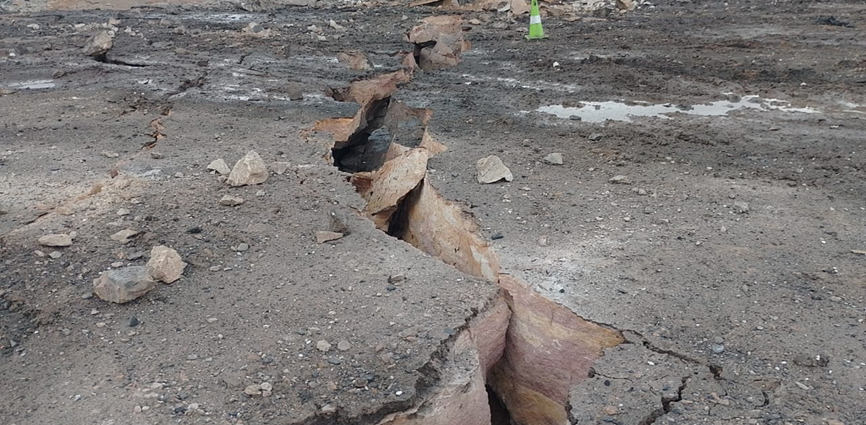
Dermody said this approach wass illustrated at an open-cast diamond operation mining kimberlite. “The site operated with 14 m benches and a powder factor of about 2.3 kg/m³, but fractured ground created a persistent challenge,” he said.
Losses of explosives into voids and cracks reduced effective energy, resulting in poor fragmentation. “The operation responded with a 15% increase in powder factor, while conventional solutions were ruled out due to contamination risks,” he said.
BME developed a tailored solution using Innovex 300D™, an emulsion explosive suited to fractured geology. “This allowed the explosive to retain its integrity within the blasthole, reducing losses and improving energy distribution,” he explained.
The result was improved fragmentation and more efficient energy use without compromising downstream processes.
“This is one example of how we are delivering safer, more consistent and cost-effective blasting performance across challenging environments,” he concluded.
