













Mining in Africa underpins the continent’s economy, supplying more than 50% of the world’s cobalt and over 80% of its platinum group metals — materials critical to batteries, AI chips, and advanced technologies. As global demand for minerals continues to rise, it places even greater importance on sustainable, well-managed operations across the sector.
Water is integral to every stage of mining — from mineral processing and extraction to dust suppression and equipment cooling. It is also a significant environmental risk. Contamination from heavy metals and acid mine drainage can cause lasting damage to ecosystems and communities. Developing robust water quality testing protocols is therefore essential for environmental compliance, operational efficiency, and maintaining community trust.
Key Water Quality Challenges
Acid mine drainage (AMD) is among the most serious challenges facing mining operations. When sulphide minerals exposed during excavation react with oxygen and water, they produce sulphuric acid that mobilises heavy metals such as iron, copper, arsenic, and manganese — contaminating nearby waterways and posing long-term environmental risks.
Tailings storage facilities present a related risk. Seepage from poorly managed tailings dams can affect groundwater quality, making continuous monitoring critical for early detection of potential issues. Meanwhile, the increasing use of water recycling within operations introduces further complexity: while recycling reduces freshwater demand, it can lead to the accumulation of dissolved solids and reagents that affect mineral processing performance. Accurately understanding these water chemistry dynamics requires reliable and consistent testing.
How the Palintest Portfolio Supports Mining Operations
Traditional monitoring relied on periodic sampling followed by laboratory analysis — an approach ill-suited to remote mine sites where transport delays and sample degradation can compromise results and slow decision-making. Portable field analysers now allow operators to measure parameters such as pH, turbidity, heavy metals, hardness, and alkalinity directly at the sampling point, enabling faster and better-informed responses.
The Palintest portfolio addresses a wide range of mining parameters:
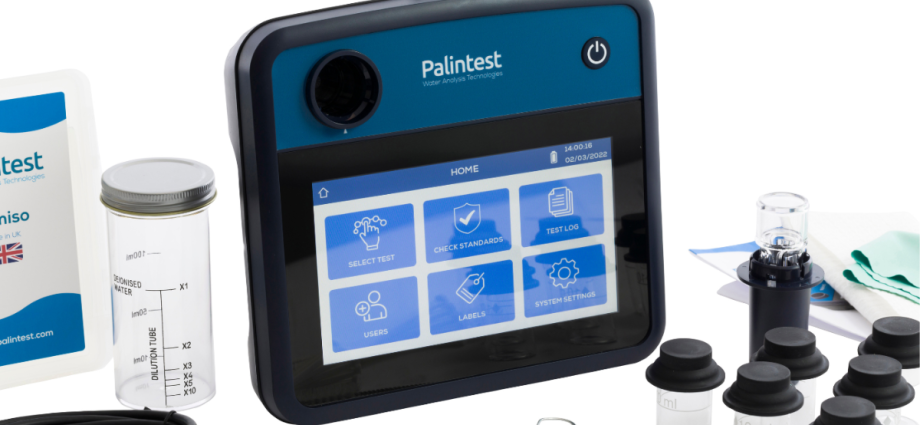
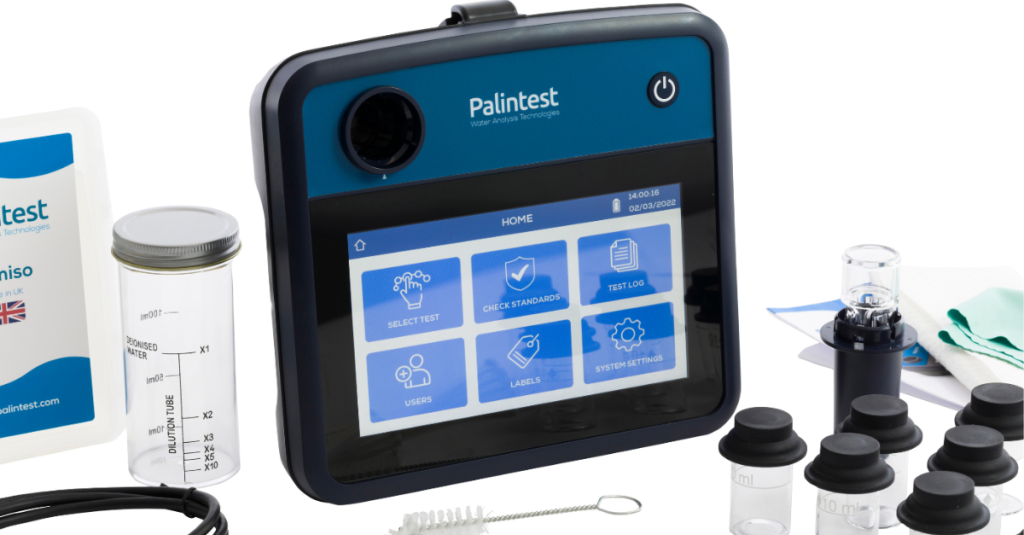
- Photometers – The Lumiso Expert tests for sulphates, hardness, alkalinity, chloride, phosphate, chlorine, and more via an intuitive touchscreen interface. Its IP67 waterproof and IK08 impact-resistant build ensures reliability in demanding field environments, while integrated data management simplifies audit compliance.
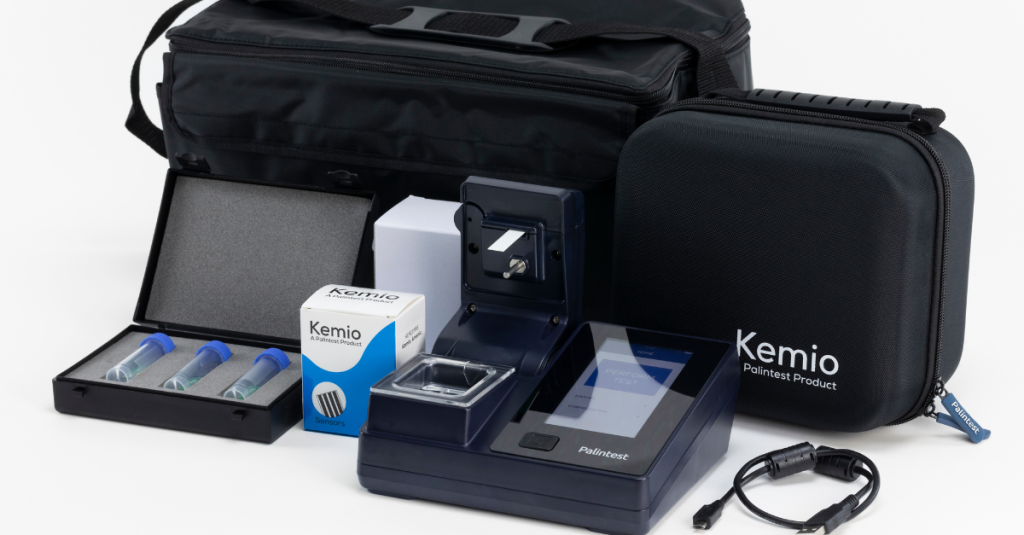
- Electrochemical sensors – Kemio™ uses single-use sensors to detect heavy metals — including lead, arsenic, copper, and cadmium — in under five minutes on-site, eliminating lab dependency and enabling real-time intervention.
- Turbidity measurement – Turbidity Expert delivers precise cloudiness readings, helping engineers assess sediment loads and confirm that process water is suitable for mining equipment and chemical use.
- Data management – Palintest Connect shares results, GPS coordinates, and test data across teams, supporting oversight, trend analysis, and regulatory reporting.

Mines in Ghana, Tanzania, and South Africa have adopted these field-based solutions to minimise environmental impact and reduce operational disruption. Early detection of rising metal concentrations in seepage water, for example, allows operators to intervene before contamination spreads beyond containment systems.
Best Practices and the Road Ahead
To maximise the value of water quality analysis, mines should standardise sampling protocols, integrate monitoring into broader environmental management and tailings systems, and invest in tools with intuitive interfaces that reduce training time while maintaining measurement consistency.
Looking ahead, portable testing combined with cloud-based data analytics is enabling a shift from reactive monitoring to predictive environmental management. As ESG reporting requirements continue to tighten, reliable water data will play a growing role in demonstrating responsible mining practices to regulators, investors, and local communities. The operations that invest in robust monitoring systems today will be better positioned to manage risk, improve performance, and secure the long-term stakeholder trust that ultimately underpins their social licence to operate.
